



South Carolina Coastal Resilience Implementation Plan (CRIPs)
The Nature Conservancy (TNC), in partnership with the South Carolina Office of Resilience (SCOR), is developing three regional Coastal Resilience Implementation Plans (CRIPs) for South Carolina. These regional plans will serve as a pipeline of projects that are designed to improve the health of the South Carolina coast, protect people and infrastructure, and incorporate the next generation of nature-based solutions to help address coastal hazards.
Complement ongoing coastal resilience efforts
Develop approaches and techniques that can adapt to changing coastal flooding conditions
Provide multiple benefits to coastal communities and habitats
Enhance coastal ecosystems while protecting people and infrastructure
Coastal Hazards
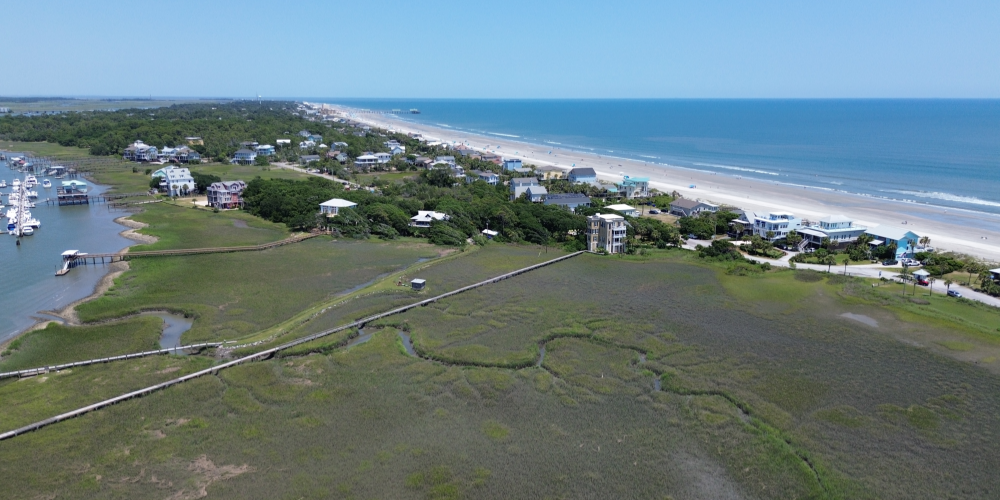
South Carolina’s coastline is dynamic and faces multiple hazards, including:
- Coastal and riverine flooding
- Erosion and sea level rise
- Community infrastructure impacts
- Habitat loss
- Water quality degradation
Our Approach to Adaptation
Science and data-driven process to identify large scale nature-based interventions that help to address South Carolina's evolving coastal changes.
What efforts are currently ongoing in coastal resilience and how does the CRIP complement those efforts?
Across South Carolina, many site- and community-scale projects are underway. These efforts focus on localized resilience strategies, including habitat restoration, flood mitigation, and community engagement. The CRIPs are intended to:
- Seek out complementary, nature-based approaches that support these ongoing efforts.
- Focus on gaps in current planning efforts
How is this TNC Nature-Based CRIP approach different from other efforts?
These CRIPs will identify large, landscape-scale nature-based solutions (typically over 10 acres), acting as connectors between individual projects. Projects may emphasize landscape transition in some locations as a result of future change scenarios and projections. Other locations may include more traditional defense measures in response to forces of change.
How do we frame adaptation for South Carolina’s coastline with this approach?
We will evaluate nature-based project opportunities across a range of adaptation approaches and in coordination with other ongoing resilience planning efforts. Adaptation approaches may include:
- Managing change and transition of the landscape in strategic locations to support broader resilience goals
- Protecting, defending, and/or restoring existing conditions where change is less desired
What are the steps in putting together this pipeline of interventions?
Our process includes:
1. Defining goals and objectives
2. Reviewing existing resilience planning efforts
3. Defining criteria for selecting project locations and project types
4. Defining criteria for prioritizing projects
5. Ranking and selecting final projects
Project Details
The project will use a 2-year timeframe and engage local and state partners.
Project status and timeline
Establish goals and objectives for coastal resilience interventions.
Develop criteria for selecting project locations and types.
Draft a preliminary list of projects and begin prioritization based on developed criteria.
Finalize project prioritization and prepare for implementation planning.
Publish final reports and recommendations for CRIP implementation.
Project partners
This initiative is supported by a diverse coalition of partners who bring expertise, resources, and local insight to guide the planning and implementation of CRIPs.
Glossary of Project Terms
Testimonials

I’m excited for a resilient future of sustainable South Carolina!
Amelia Guerry
This project is a wonderful opportunity to think collaboratively and strategically about how we can adapt and plan for coastal resiliency for our communities through a nature-based solution lens.
Kim Jones
It is encouraging to see regional efforts that can begin to address root causes of larger issues like SLR instead of just the symptoms. (Proactive instead of reactive!)
Jessica Kinsella
This is my first time learning about the project, but overall I appreciate the level of involvement of all the organizations. The benefits for local communities require a high level of interactions and involving many diverse groups aids with that.
Weston Beck

Understanding how SCOR is directly connected with coastal resiliency efforts is enlightening as a new watershed coordinator. Building on existing projects with current stakeholders\ can help us better serve our communities.
Marcella Domka
The effects of climate change are real and its important that we prepare for what that means for coastal South Carolina. This project is an ambitious attempt to look at long-term and large-scale efforts to build resilience for our environment and communities.
Courtney Kimmel
LCOG is excited to be participating in the Southern Regional CRIP- an effort coordinating resilience across the Lowcountry.
Stephanie Rossi

It has been truly inspiring to learn about the excellent work taking place along the SC coast. I am thrilled to have the opportunity to work on such an important project with the best minds in SC to create a more resilient coast.
Lucas Hernandez
This is an exciting project! With development pressures facing Jasper County, identifying projects that address resiliency along our coastline and estuaries will be very beneficial to our community.
Lisa Wagner
I feel hopeful and confident that this project will increase our communities’ resilience to coastal and climate challenges and foster acceptance and understanding of resilience strategies among community members.
Sophia Truempi

I am excited for this project to begin educating and involving the communities for nature-based solutions.
Britt Hartley
This project was made possible by NOAA, led by The Nature Conservancy in South Carolina, and supported by the South Carolina Office of Resilience, Jacobs, and Weston & Sampson to form the “Project Team”
Contact us
Susanna Hopkins
TNC-SC Resilience Program Manager
susanna.hopkins@TNC.org
